
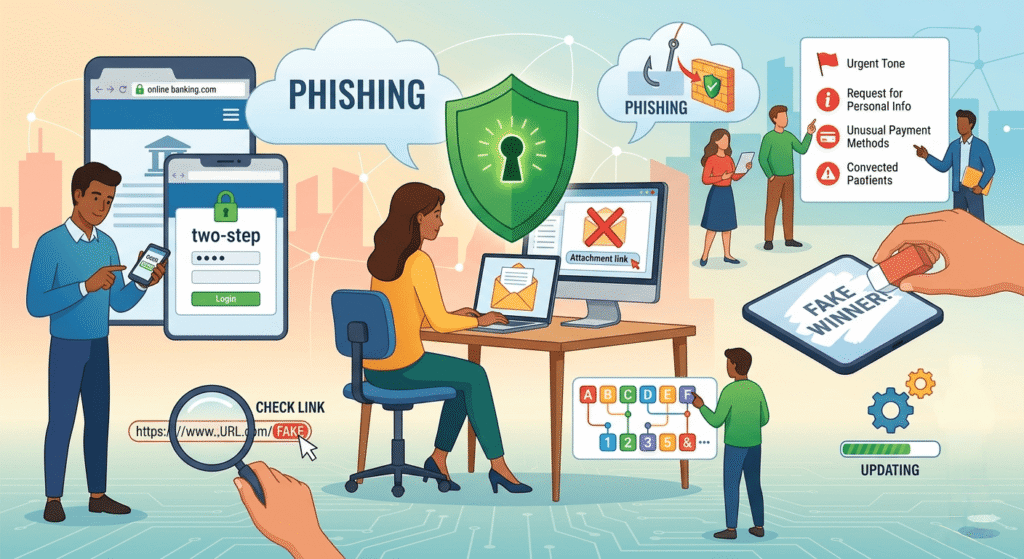
In the current world, where everything is interconnected, the internet serves as both a strong instrument and a dangerous environment. All parts of life now exist online from digital banking to online shopping and social media platforms. The growing risks to our online safety emerge together with the advantages of digital convenience. Cybercriminals have developed advanced techniques to commit their crimes while online scams have progressed to a point of severe danger.
The suspicious email you received along with the too-good-to-be-true offer and the random message asking for your personal information means you are part of a larger group. Internet users must learn how to defend themselves against online scams because this skill has become a vital requirement.
The guide provides users with straightforward methods which enable them to secure their online activities while maintaining their mental balance.
Understanding Online Scams

Online scams operate as internet-based fraud schemes which aim to steal money and personal data and gain access to online accounts. The deceptive tactics of these scams together with their urgent nature create a situation which leads victims to make hasty decisions.
Phishing emails and fake websites and tech support scams and online shopping fraud and investment scams represent the main types of online scams. The various methods used to execute these scams all aim to create trustworthy relationships with their victims.
The first step in protecting yourself is recognizing that scams can happen to anyone. Your best protection method depends on your ability to recognize potential threats.
Why Online Scams Are Increasing

The increase in digital payments and home-based professional work has given fraudsters new chances to commit their crimes. Cybercriminals can achieve substantial financial gains because billions of internet users access the web every day.
Scammers use advanced techniques that involve social engineering to create emotional responses from their victims which include fear and curiosity and excitement. The message about your bank account being compromised will lead you to make decisions without using proper judgment.
Scams now use technological advancements to create more authentic-looking fraudulent operations. Scammers create deceptive websites which totally resemble legitimate sites and they send out emails that look like they come from certified professionals. People need to remain alert because this situation requires constant monitoring.
Key Signs of an Online Scam
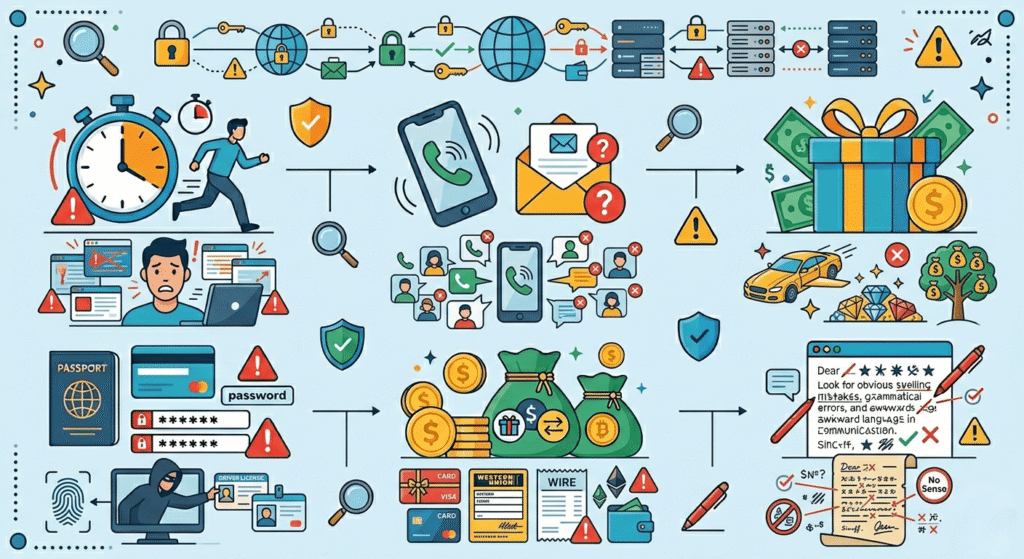
Knowing what the warning signs are can assist in preventing you from becoming a scam victim. Most scams have certain similar red flags.
One of the most frequent signs we’d say is urgency. For example, if a message forces or rushes you to do something straight away like “Your account is going to be locked today!” the likelihood is very high that it is a scam. It is very unusual for real organizations to require instant action.
A further sign is when sensitive information ie password, OTP, banking-related details etc are asked for. No authentic company would do that over the mail or text.
Incorrect language, suspicious links, and the kind of sweet deals that make you suspicious very much indicate possible scams. If your feelings get a kind of weird vibe, give weight to it.
Practical Ways to Protect Yourself from Online Scams
People can safeguard their online presence without needing to understand technical skills. Your safety will improve if you practice these particular intelligent habits.
You should create strong passwords that are different for each of your accounts. Users should avoid password repetition across different online platforms. Password managers provide a safe method for users to store their passwords.
You should activate two-factor authentication (2FA) on all available systems. This security measure creates additional protection because it prevents scammers from reaching your account when they possess your password.
You must confirm the authenticity of all sources before you proceed to click on any links. Users should check link destinations by moving their cursor over links and they should stay away from clicking on links that seem unfamiliar or doubtful. Users should access the official website when their judgment leads to uncertainty.
You need to ensure your devices have the latest software updates. Software updates deliver security enhancements which protect against emerging threats. Your system will remain exposed to risks when you decide to skip software updates.
Public Wi-Fi access requires users to exercise extreme caution. Unsecured networks should not be used for accessing sensitive data such as banking applications. Users who require additional security should choose to establish a virtual private network (VPN).
Safe Online Shopping and Payments
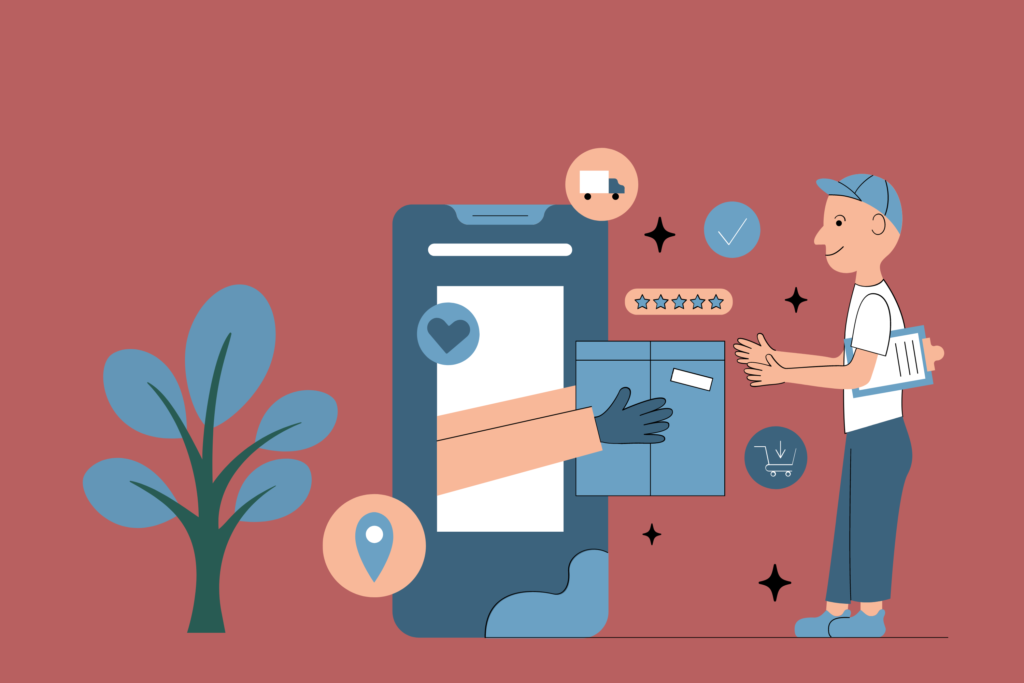
Online shopping scams are one of the top types of fraud. Scammers can lure you into paying for goods that are never delivered by using fake websites and fraudulent sellers.
You should only make purchases on those web shops you totally trust. Ensure that the site you are buying from is secured, look out for URLS starting with “https://” and showing a padlock icon. Avert very cheap prices that are too good to be true.
Prefer safe payment methods like credit cards and reliable payment platforms. Do not send money by direct bank transfer to sellers whom you do not know because such transactions are more difficult to track and recover.
If you are going to purchase from a new seller, it is advisable to read their reviews and check their ratings. Either an absence of reviews or very positive, generic ones should be considered warning signs.
Protecting Your Personal Information
Your personal data is very valuable, and con artists are searching for new ways to gain it. Be careful of the things that you share online (especially in social media) because they can use that information against you.
Do not share your phone number, mailing address, or plans for vacations on any social media platform (Facebook, Twitter, etc). Con artists can disguise themselves as someone you know in order to perpetrate a scam.
Only fill out information about yourself if it is completely necessary. You should also confirm that the website you are using to provide this information is legitimate before submitting it.
Make sure you check your bank statements on a regular basis and review your online accounts for any transactions that seem strange. Spotting out-of-the-ordinary activity early can help prevent you from losing even more money.
What to Do If You Suspect a Scam
The process of human communication can experience errors despite the existence of preventive measures. The moment you suspect a scam situation, you must take immediate action.
You must stop all contact with the person who you believe is trying to scam you. The user should not click on more links or share any extra information.
You need to update your passwords because you have disclosed your account credentials. Users should activate 2FA protection which should be active.
People who have shared their payment information must contact their banking institution. The bank can assist customers by blocking unauthorized transactions and also protecting their account.
You must inform the local police department and the cybersecurity organization about the scam. Reporting the incident helps protect other people from becoming victims.
Conclusion
Protecting yourself from scams is really important these days. Scammers are always coming up with tricks but if you do simple things like check where information is coming from keep your personal stuff safe and stay up, to date on what is going on it can really help.
The internet is very useful when you use it correctly. If you are careful and do things online you can use the internet and not have to worry about bad people trying to hurt you.
FAQs
What is the most common type of online scam?
Phishing scams are among the most common. They involve fake emails or messages designed to trick you into revealing personal information.
How can I tell if a website is safe?
Check for “https://”✓ in the URL, look for a padlock icon, and verify the domain name. Avoid websites with unusual or misspelled URLs.
Can I recover money lost in an online scam?
It depends on the situation. Contact your bank immediately—quick action increases the chances of recovering lost funds.
Are mobile phones also vulnerable to scams?
Yes, mobile devices are frequently targeted through SMS scams (smishing), fake apps, and malicious links.
Are scams common on WhatsApp and SMS?
Yes, very. Messages with links, offers, or urgent requests are common scam tactics on these platform