
Table of Contents
The Smartphone Price Increase has gradually become very difficult to overlook. It used to be that a couple of years back you can buy a powerful smartphone at a reasonable price without much trouble. Now, even mid-range mobile phones are being sold at a high price. People from all over the world are wondering why mobile phones are still getting more expensive when technology is becoming more common. This issue of increasing prices is not only limited to the most expensive devices. The prices of budget and mid-range smartphones have also been affected by the increase, along with the changing market dynamics and global economic pressures. Knowing the reasons for the smartphone price hike is a good strategy for buyers to make wiser decisions and it also gives them a heads-up about the upcoming trends in the mobile phone industry.
Rising Component Costs Are Driving the Smartphone Price Hike
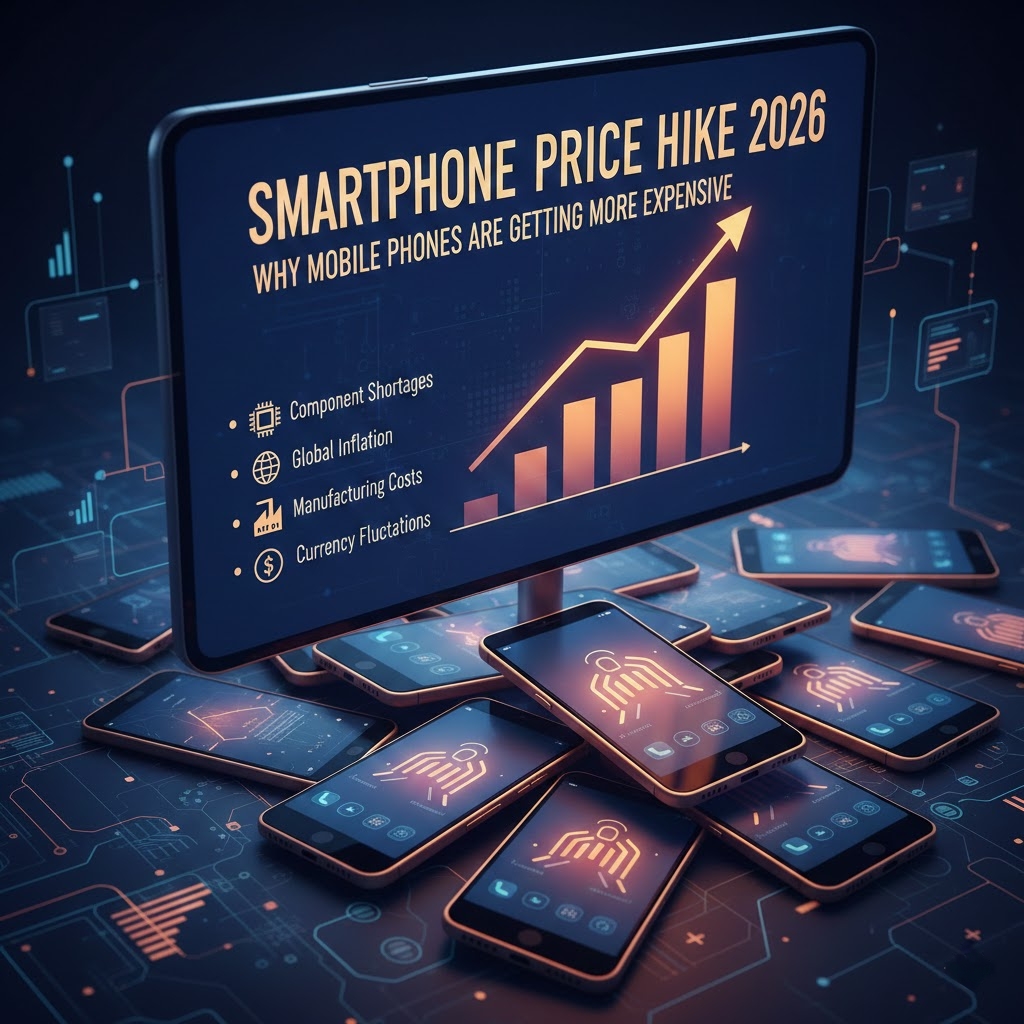
The price increases for smartphones has been largely due to the increasing price of the components that comprise a smartphone. Today’s smartphones have advanced hardware that is costly to manufacture: over time, Chips, Displays, Cameras, and Batteries have all increased in price. Chips are found in the center of every smartphone, which makes up the majority of their operating systems. The growing demand for smartphones by the world, along with increases in the cost of materials used to make chips and shortages of chips globally, have contributed to the rising cost of chips. Small-scale manufacturers of smartphones will continue to pay more for chips, which will impact the final price of smartphones. OLED and AMOLED Displays (used for high-quality screens) represent a growing shift from traditional LCD Displays, and thus increase the price of smartphones, as manufacturers are increasingly using OLED and AMOLED Displays in mid-range smartphones. In addition, the introduction of more sophisticated Camera Modules in smartphones will also increase the prices of smartphones. New Camera Modules that include multiple lenses, larger Sensors, better Optical Image Stabilization (OISS), and new AI capabilities will continue to add value to smartphones and increase their cost.
Inflation and Global Economic Pressure
The smartphone price increase globally can largely be attributed to inflation. The production and shipping of goods have become more costly due to the rising prices of fuel, higher labor costs, and increased transportation expenses. The creation of a smartphone involves the use of a worldwide supply chain for different parts. For instance, a component can be made in one country, while the assembly is done in another, and it can be sold in several markets. Therefore, any disruption or increase in cost along this chain will lead to higher prices at the retail level. Changes in exchange rates also affect the pricing of smartphones. When the value of local currencies falls against the US dollar, the price of imported components goes up. To keep their profits, manufacturers usually increase the prices of the products in the markets where consumers have to bear the additional costs, thus creating noticeable price hikes in certain areas.
5G Technology and Its Impact on Smartphone Prices
The move to 5G is one of the major reasons that the cost of smartphones has gone up considerably. Although 5G provides faster speeds and a more reliable connection, it entails upgrading the device with new hardware. The cost of a 5G modem is considerably higher than that of a network chip from a previous generation. Besides that, the smartphones have to be equipped with better antennas; the cooling systems have to be improved and the power has to be managed efficiently to make sure that the 5G performance is supported. At the beginning, 5G phones were only available in flagship models. As a result, even cheap phones are expected to have 5G capabilities, which means that the minimum cost has increased in all price categories.
Premium Features Becoming Standard
A part of the explanation why the price of a smartphone has gone up markedly is that many people have shifted premium features to mid-range and budget phones. Now, consumers demand features that used to be only for high-end devices. Just to name a few.
- High refresh rate displays
- Fast charging technology
- Multi-camera setups
- In-display fingerprint sensors
- Premium glass or metal designs These features enhance user experience, however, they also raise production costs. Since brands are competing to provide more value, the price of smartphones keeps getting higher.
Research and Development Costs
Innovations do not come for free. To maintain their position in the market, smartphone brands have to spend a lot on research and development. The introduction of a new camera technology, foldable display, AI features along with software optimization are very demanding for the company in terms of investment. The case of foldable phones is very illustrative of the impact of innovation on the pricing of tech products. Sophisticated hinges, flexible screens, as well as durability testing, contribute significantly to the increase of costs. R&D investments in traditional smartphones also pay off but at the final retail prices.
Marketing and Brand Positioning
One of the major causes for the increase in the price of smartphones is the way customers perceive the brand. With premium branding, companies can have the luxury of charging higher prices even if the hardware improvements are only marginal. The use of marketing campaigns, celebrity endorsements, and global product launches is a costly affair. These expenses are included in the price of smartphones. In many cases, consumers pay for more than just the hardware; they also pay for the brand value and the social status that comes with it.
Government Taxes and Import Duties
In a lot of countries, the policies of the government are one of the main reasons for the increase in the prices of smartphones. What really makes the price go up are the import duties, sales taxes, and regulatory fees that are added on the final cost consumers have to pay. Although local production programs are a good way to lower some prices, parts that are imported are still taxed. Because of this, smartphones become pricier in places where there are high import duties.
How the Smartphone Price Hike Affects Consumers
The increasing price of smartphones has altered the consumer purchasing behavior. As a result, a lot of people are keeping their gadgets for a longer period of time and thus, replacing them with new ones less frequently. There are several changes in consumer behavior that can be clearly observed, such as.
- Enhanced desire for the purchase of a second-hand smartphone.
- Expansion of the market segment for the devices with an average price.
- Choosing a longer period for software updates.
- Concentrating on features that offer the best value for the money The rise in the cost of smartphones has made consumers more careful and better informed about their decisions.
Tips for Buying a Smartphone During a Price Hike
Even with the increase in smartphone prices, savvy buyers are still able to find great deals. Check out these tips that you can easily put into practice.
- Don’t purchase the new product at its release but rather wait for price reductions
- Check out the differences between mid-range and high-end phones
- Why not think about the flagship models that are a few years old?
- Get ready for the festivals sales and exchange offers
- If you only concentrate on the features that you really need then you can make informed decisions which will lead to getting the best value of your money.