
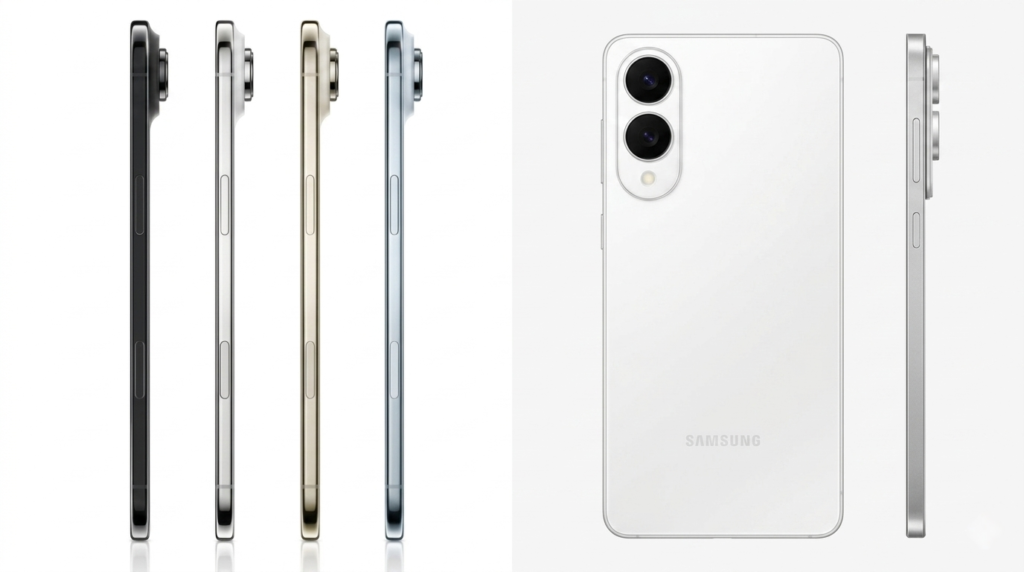
Smartphone manufacturers demonstrate their design innovation every year. The slim smartphone design trend persists through time because it continues to gain popularity. The ultra-thin devices appear beautiful when you hold them but their actual value remains uncertain. People should learn about both advantages and disadvantages before they purchase the thinnest phone available today.
Table of Contents
What Is a Slim Smartphone?
The slim smartphone functions as a mobile device that designers created to have a thickness below 7mm. The companies Samsung, Apple, Motorola, and Tecno have introduced new ultra-thin smartphones during the past few years. The company wants to create a high-end lightweight smartphone that provides an elegant design without delivering a heavy experience.
The production of slim products incurs financial expenses. To achieve the required slimness manufacturers must reduce their products’ battery life and camera size and product durability. We will examine your real advantages together with your total losses.
The Pros of a Slim Smartphone
Sleek Design and Premium Aesthetics
There is no denying that a sleek and slim phone looks and feels more expensive compared to a thicker phone. A slim phone has a modern, stylish look that is eye-catching and will help identify your phone from the rest of the phones around you. If you value design, a slim phone is going to give you that premium quality right off the bat.
If you carry your phone in your shirt pocket or wear slim jeans, a slimmer phone makes your daily life much easier. The compact size of a thin phone allows for less bulk while still providing the same screen size as a thick phone.
Lightweight and Easy to Carry
The primary benefit of having a thinner mobile device is that they tend to have a lower total mass, which allows for easier long-term hold while making voice calls, on a trip, or during prolonged internet search sessions.
Lightweight smartphones are also less strenuous on your wrists and hands after long periods of time. This is especially apparent if you use your smartphone repetitively throughout the course of a day.
Better In-Hand Comfort and Ergonomics
A slim phone is more comfortable to hold in your hand. Its slim body allows your fingers to grip it better, which helps reduce fatigue from holding a phone for a long period of time. This is particularly helpful for people with smaller hands.
Using your phone one-handed is easier when you use a slim phone with an optimized screen size, since this makes it easier and more intuitive to move around on the screen. Many people who use thin phones claim that they feel like their hand has been stretched out further than it actually has.
Modern Appeal and Trend Alignment
Smartphones that break new ground in their look are the ones that get the biggest share of the market. Super- slim phones are a feat of top-notch tech engineering and also mark the user as a person with a keen eye for the latest style. Besides, from a social and lifestyle point of view, thin smartphones fit well with the minimalist trend that is making waves in fashion, interior design, and gadgets.
Companies launching super-thin top- of-the-line phones typically get a lot of attention, indicating that thinness is still a feature that many consumers find attractive.
The Cons of a Slim Smartphone
Smaller Battery Capacity
The biggest problem with phones is that they do not have big batteries. To make a phone thin companies have to use batteries. This means that thin phones do not last long as other phones.
If you watch videos. Play games on your phone a lot or if you use the GPS a lot a thin phone will not last a full day. You will probably need to charge it by the middle of the afternoon. People who use their phone a lot get really worried about the battery running out and thin phones make this problem even worse. Thin phones and small batteries are an issue, for people who need their phone to last all day.
Compromised Thermal Performance
Slimmer phone designs do not have a lot of room for heat to escape from the inside. When you use your phone to do things that need a lot of power like run apps or charge the battery quickly it gets hot. Thin phones have a time dealing with this heat so they start to slow down the processor to cool off. This is called thermal throttling.
For people who like to play games on their phone or use it a lot thermal throttling is a problem that can make their phone run slower. Phones that are a little thicker and have ventilation like some flagship phones can handle heat much better, than slim phones.
Camera Limitations
Cameras that take pictures need space to work properly. They have sensors and special lenses that make the pictures look nice and clear. These things also need something to help keep the picture steady. All of these parts need to fit inside the phone.
If taking pictures with your smartphone is important to you a really thin phone might not take pictures as well as a thicker phone, with a bigger camera. Smartphone photography is what matters here and a slim phone just does not have space for a good camera. Smartphone photography needs a phone with a camera module to take great pictures.
Reduced Structural Durability
Thinner materials are not very strong. They can. Crack easily. Some thin phones have been criticized because they bend when you put pressure on them. This has happened to a few phones and it is a big problem. The thinner a phone is, the material it has to withstand being dropped or bumped.
If you drop a smartphone it is more likely to get damaged. This is because it does not have edges to help absorb the impact. So when it hits the ground the glass and the important parts, inside the phone take a hit.
Limited Port and Speaker Options
Slim smartphones usually have to leave out some features so they can stay really thin. You will ever find a headphone jack on them. The speakers are also smaller which means the sound is not as loud or clear. Some smartphones even make the parts inside like the thing that makes the phone vibrate so the phone can be a little thinner.
For people who really like sound or like to use headphones, with a cord this is something you have to think about when you buy a slim smartphone.
Who Should Buy a Slim Smartphone?
A slim phone is a great choice if you:
- Value design and aesthetics over raw performance
- Are a light-to-moderate user who doesn’t need all-day heavy usage
- Prefer minimalist gadgets and carry your phone in a pocket
- Prioritize comfort and ease of one-handed use
It may not be the right fit if you:
- Are a heavy gamer or power user
- Rely heavily on camera features for photography or video
- Need all-day battery life without charging
- Work in environments where phone durability is critical
Conclusion
The new way of saying a smartphone is thin is that it is very nice to look at, is easy to hold, represents a clean modern style, but may present some real challenges such as reduced battery size, shorter lifespan, and sometimes poorer quality of pictures taken with the camera.
Prior to your purchase, you should evaluate how you plan on using your phone. If your main priorities are style and portability, then purchase the thinnest possible phone, and you’ll enjoy it every second you have it! If you are a regular user and want to be able to use your phone from the time you wake up, until the time you go to bed, consider a thicker phone, and it will last you the entire day.
Having an understanding of the pros of a phone vs. the cons will help you to make a better choice when it comes time to make your next smartphone purchase.